In short. A villa's reliability comes down to things that end up hidden in the walls and underground: what the walls are built from, whether the concrete is protected from moisture, what load the foundation is designed for, how water drains in a downpour, and what the windows and roof are like. Ask the developer about each of these and ask to see how they sign off the builders' work. Here is what to ask, using our Serenity complex in Sanur as the example.
We walked the Serenity site with the project manager. "I'm not one for compliments, but when there's something to say, I say it," he begins, and then explains where developers in Bali usually cut corners.
Walls: what they are built from
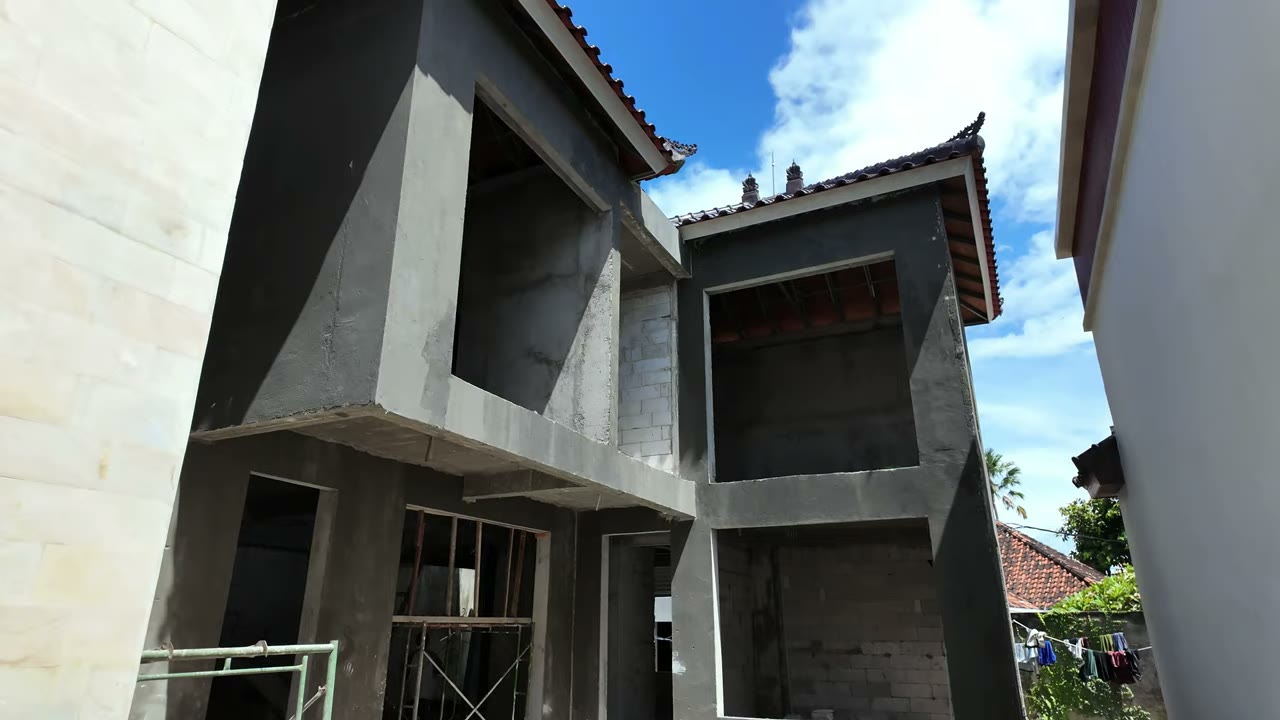
Many Bali developers use cheap batako blocks, in boundary walls and partly in the house itself. We do not. At Serenity both the walls and the boundary walls are built from white Hebel aerated concrete blocks. "We don't cut corners even on small things like this," says the project manager.
Ask: what blocks are the walls and boundary walls built from?
Concrete that keeps moisture out
Water-repellent additives go into the cement so moisture is not absorbed. Our partners have used them for 2–3 years without mould appearing. Bali's last two rainy seasons were unusually heavy and nearby areas flooded, but the complex came through "like Noah's ark".
Ask: what is added to the concrete against moisture?
A foundation with room to spare
Serenity was first planned with three storeys, but Sanur has height limits. The decision was to build two, by which time the foundation had already been poured for three or four storeys. The structure is designed for earthquakes up to magnitude 8.5. "In an earthquake, if anything is left standing, it'll most likely be this," the project manager says.
Ask: what seismic rating is the house built for, and how many storeys is the foundation designed for?
Drainage
In Bali it can rain for five to seven days straight. After last season, when neighbouring properties flooded, we added a separate drain at each villa on top of the shared drainage system. Water may still come, but it drains away much faster than next door.
Ask: where does water go in a heavy downpour, and what happened on the plot last rainy season?
Windows and roof
The windows use Japanese YKK aluminium frames. "You won't find a better aluminium profile in Bali," says the project manager: they tried many suppliers before settling on this one. The roofing material was not the cheapest either, so owners will not have roof problems.
Ask: whose window profiles are used, and what roofing?
How we sign off the walls
We use a raking-light inspection lamp on site. "It's every painter's nightmare," the project manager laughs. Under its light even the slightest unevenness in a wall shows. The painters check each wall with the lamp themselves before handing it over.
Ask: how does the developer check and sign off contractors' work?
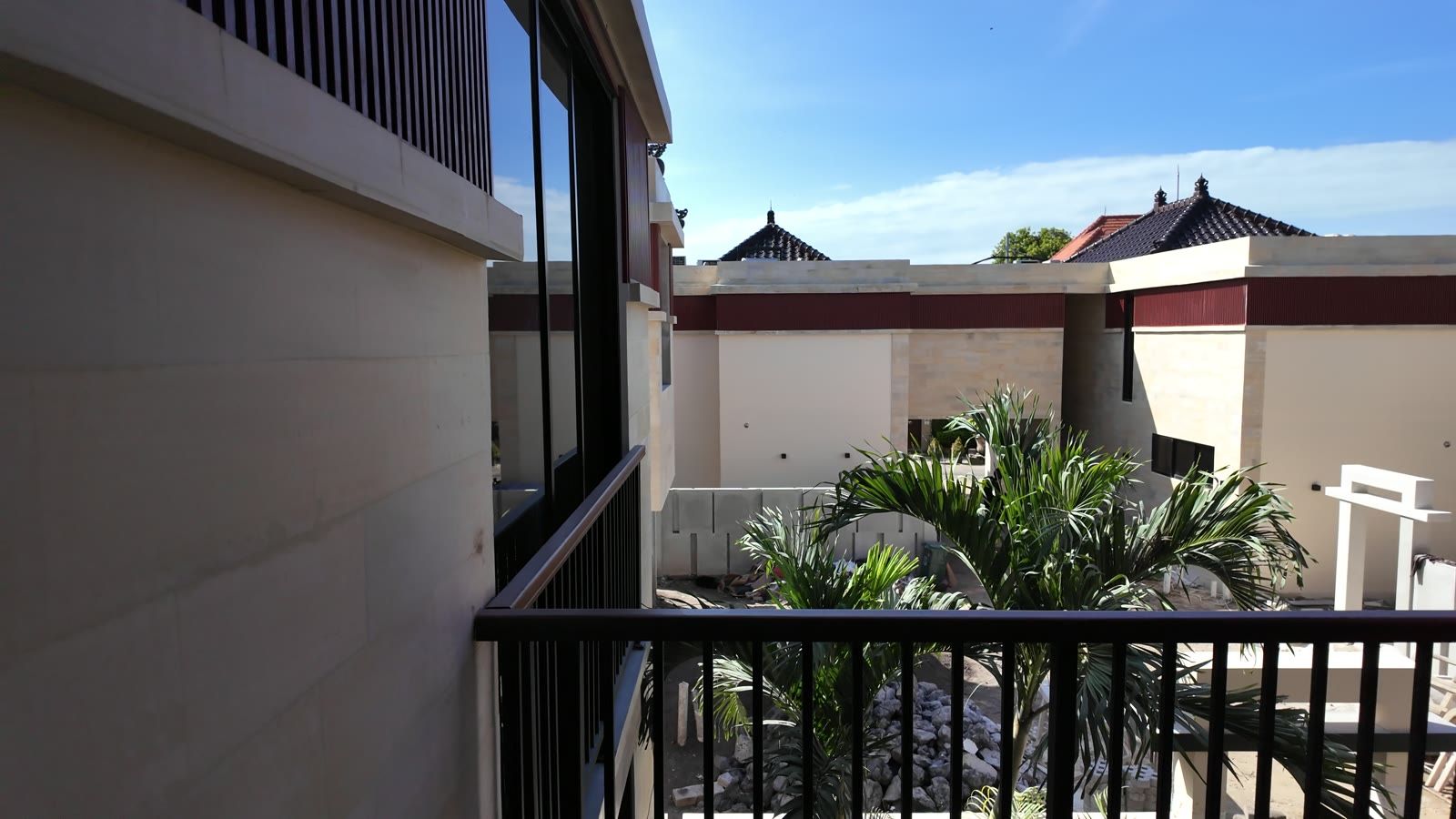
The villas that result
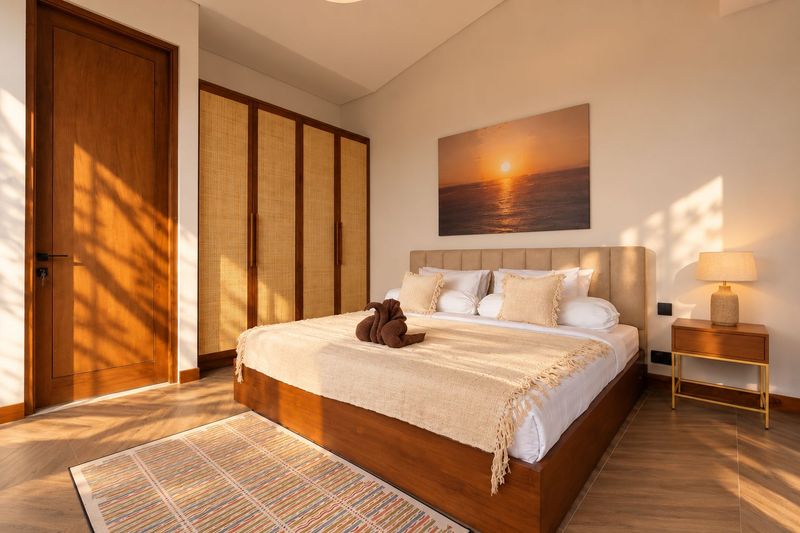
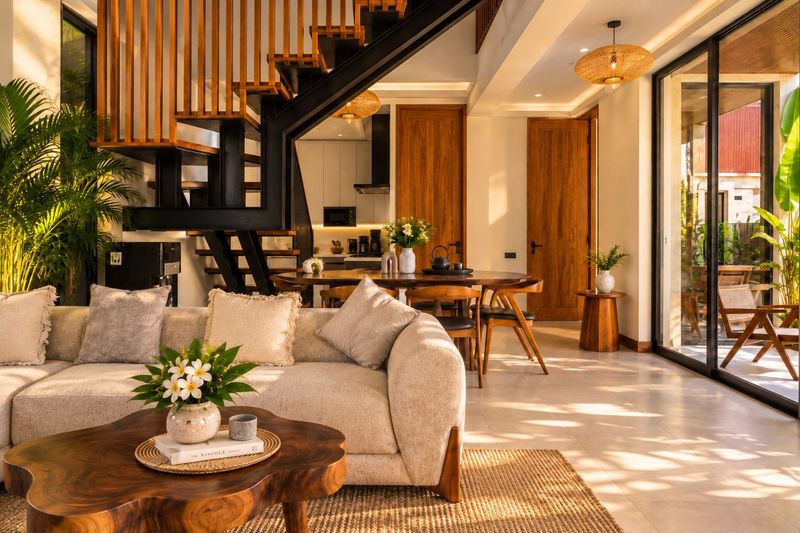
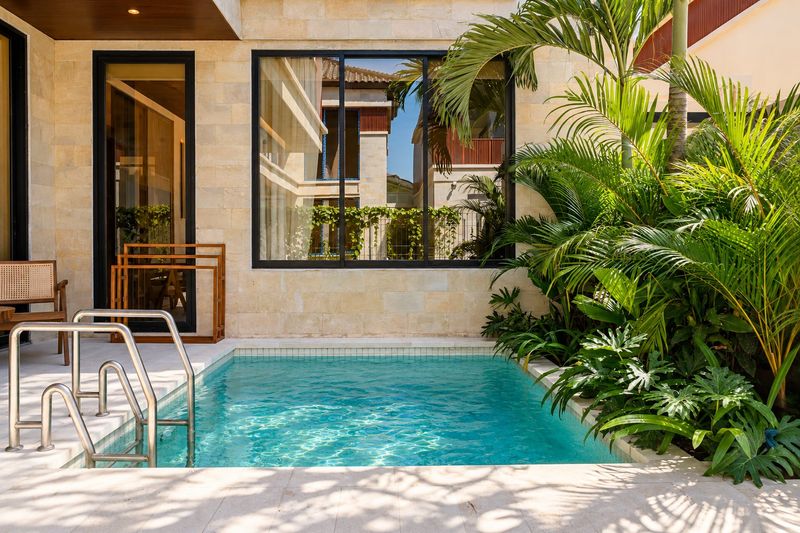
Serenity's second-row villas have three bedrooms, four bathrooms, walk-in wardrobes, a double-height kitchen-living room and balconies. Plots are 175–225 m², and villas measure 150–170 m² including terraces and balconies. Each villa has its own parking, pool, courtyard and electric gate, with a barrier and security post at the entrance.
A mall, restaurants, a hospital and the promenade are within walking distance. Land in Sanur is almost impossible to find: it mostly comes from redevelopment or from sorting out problem plots.
Read next: How we sign off villas, Why houses in Bali rot from the inside.
Key points
- A villa's reliability is hidden in its walls, foundation and drainage.
- Ask about the blocks, concrete additives and seismic rating.
- Find out what happened on the plot last rainy season.
- A good developer checks the builders' work rather than taking their word for it.
FAQ
How can I check the build quality of a villa in Bali?
Ask about the wall material, moisture protection in the concrete, the foundation and seismic rating, drainage, windows and roofing. Ask to see how the developer signs off the work.
What is Hebel, and why is it better than batako?
Hebel is a white aerated concrete block. Batako is a cheap block many builders use to save money.
What seismic rating are the Serenity villas built for?
The structure is designed for earthquakes up to magnitude 8.5, and the foundation for three or four storeys, with two built.