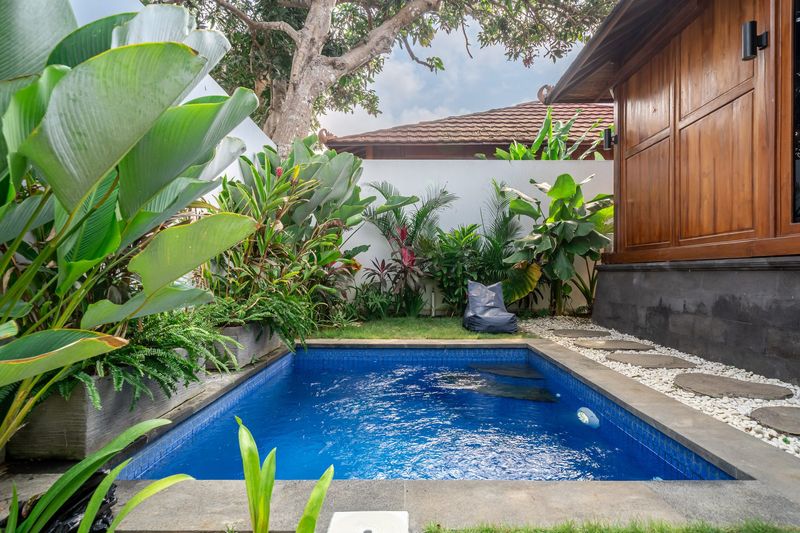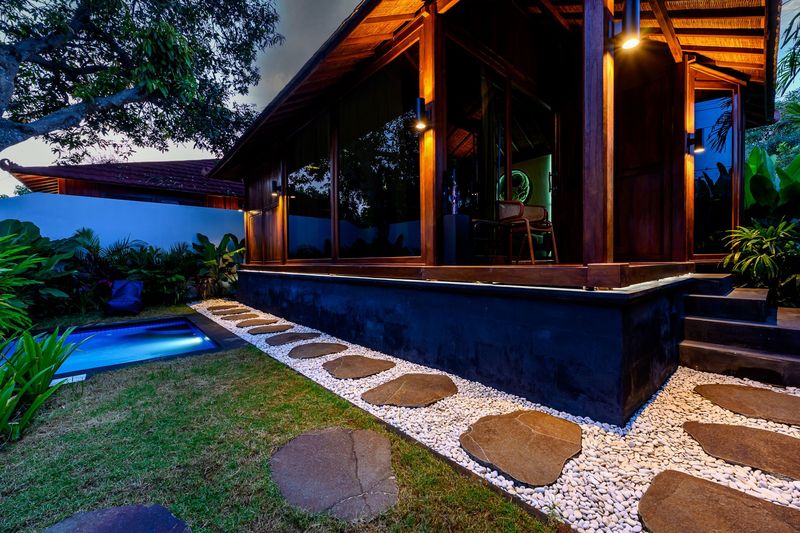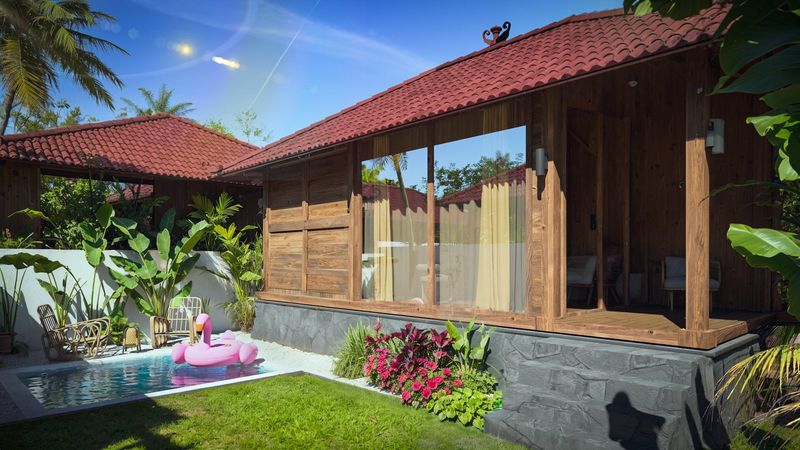
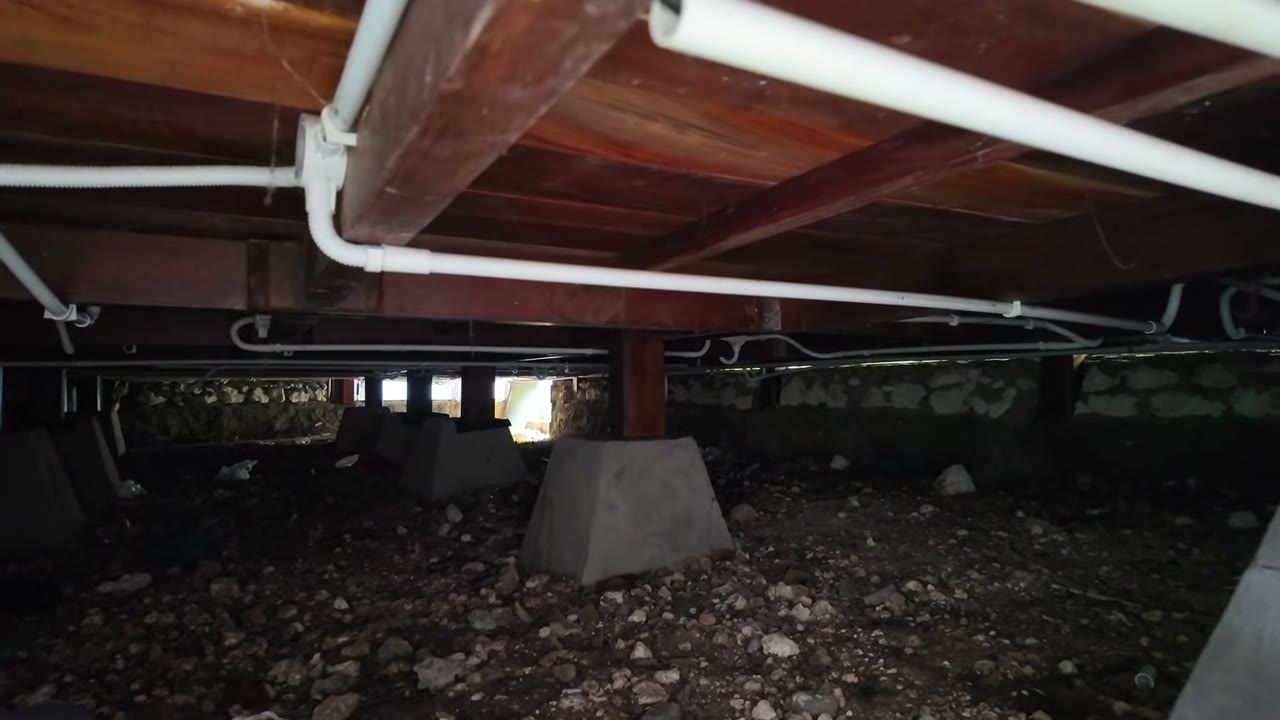
In short. Bali's humid climate sooner or later brings mould to any concrete or stone house that has no airflow and no protection from water. Our wooden houses at Mudra Villas stand on piles a metre above the ground with air moving freely underneath; the timber is dried in our own kilns and treated against insects and mould four times. The first villa has stood for more than a year and through a rainy season with no hint of damp.
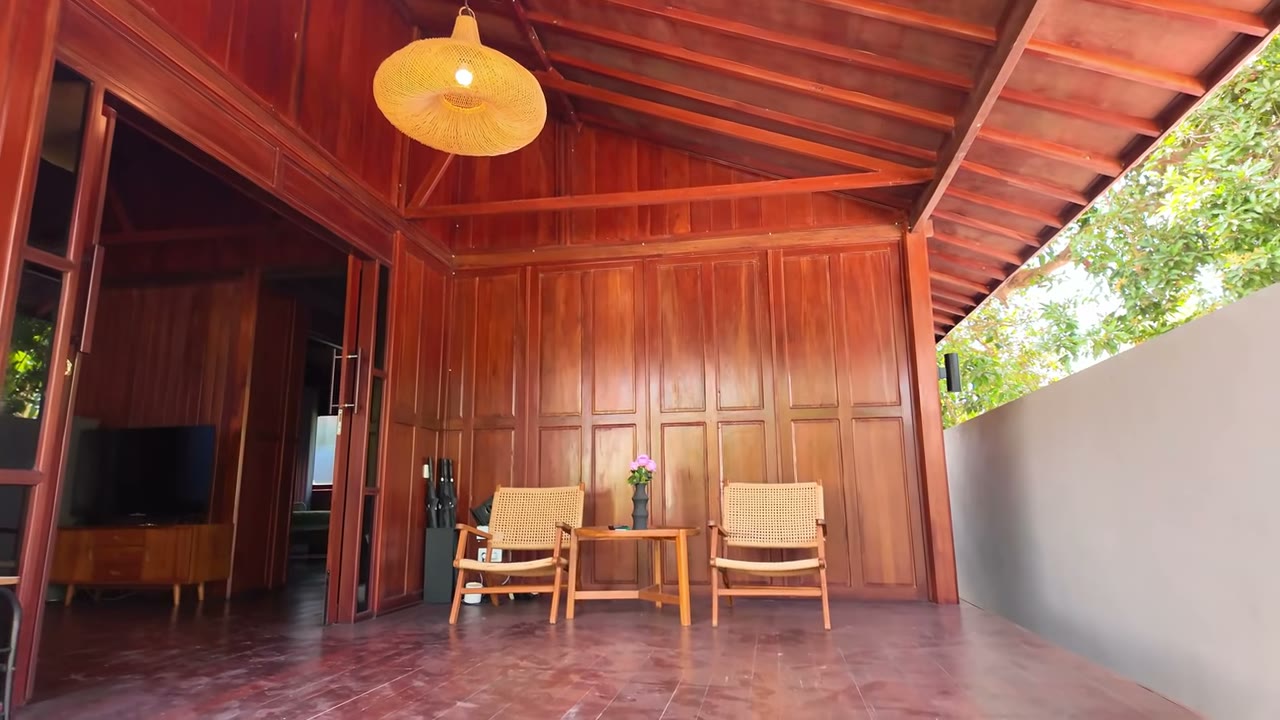
"Most homes here are concrete: high humidity, mould and all the rest," says our partner who builds the wooden houses for Mudra. That is how their factory began: they once spent a night in a small wooden hotel and decided to build the same way, but to European standards.
Where the mould comes from
Humidity in Bali is high all year. In a concrete house moisture collects in the walls and under the floor. "Sooner or later any concrete or stone house ends up with mould because of the damp," our partner says. A musty smell is one of the most common tourist complaints.
Timber behaves differently. It is a living material: in high humidity it absorbs moisture and then releases it again. But only if the house is built properly.
How to build a house that does not rot
- On piles. The house is raised a metre off the ground so air can flow underneath and everything dries out. Even in the rainy season there was no standing water beneath it.
- Dried timber. The factory has its own drying kilns. Poorly dried wood starts to move after the house is assembled.
- Treatment. During construction the house is treated against insects and mould four times.
- A closed house. A traditional Indonesian joglo is almost entirely open. We build a closed house without gaps, so small animals cannot get in.
- Multi-layer walls. They insulate against noise and heat. In Bali the point is not to keep warmth in but to keep the cool.
"The first villa has stood for more than a year, and there is not even a hint of a damp smell, let alone mould," our partner says.
What a Mudra house is made of
Take the two-bedroom house:
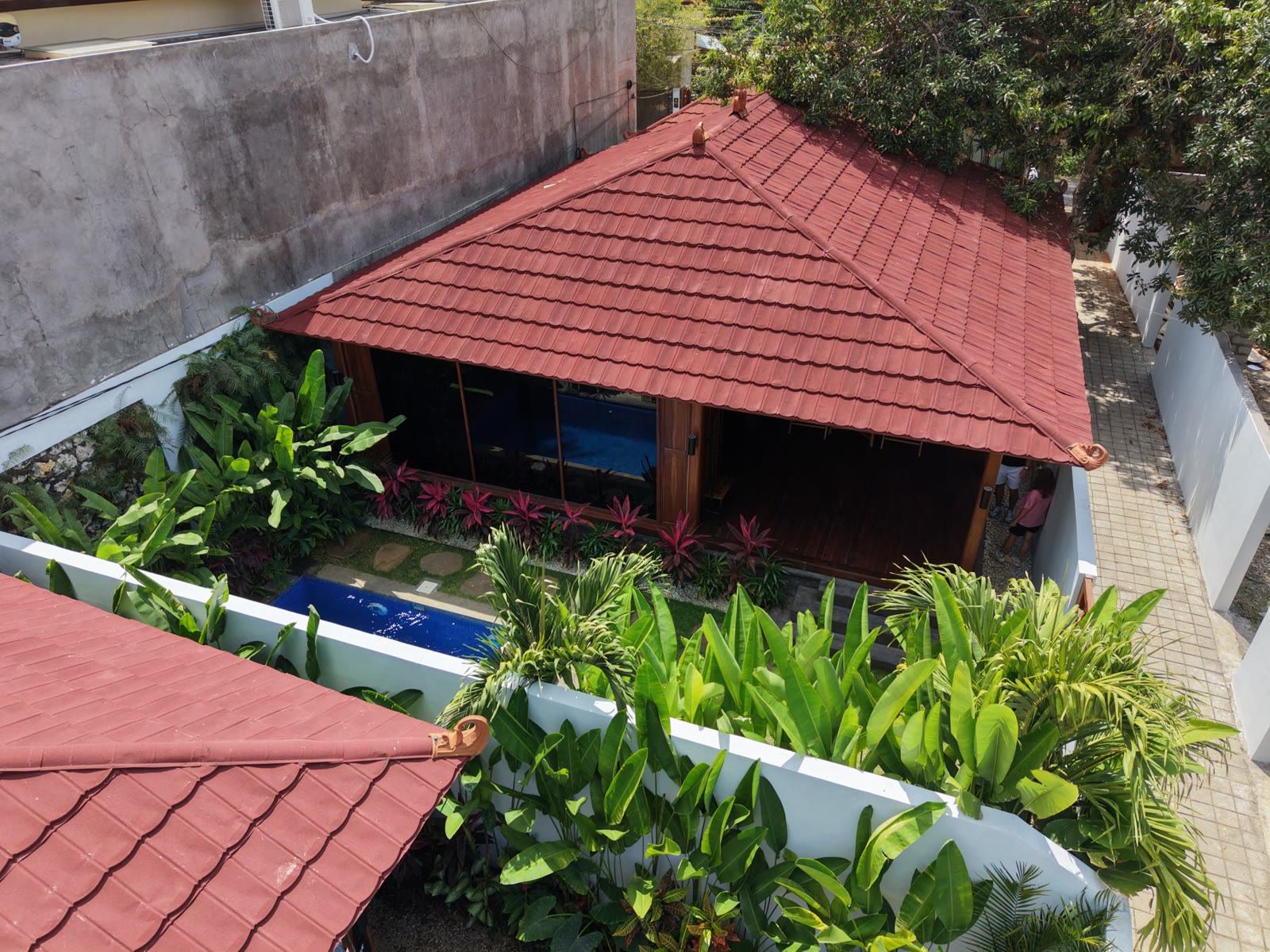
- a 190 m² plot, a 90 m² house (9 × 10 m) and a small pool;
- two identical bedrooms, each with its own bathroom, with a walk-in wardrobe between them for sound insulation;
- a kitchen-living room and a large terrace;
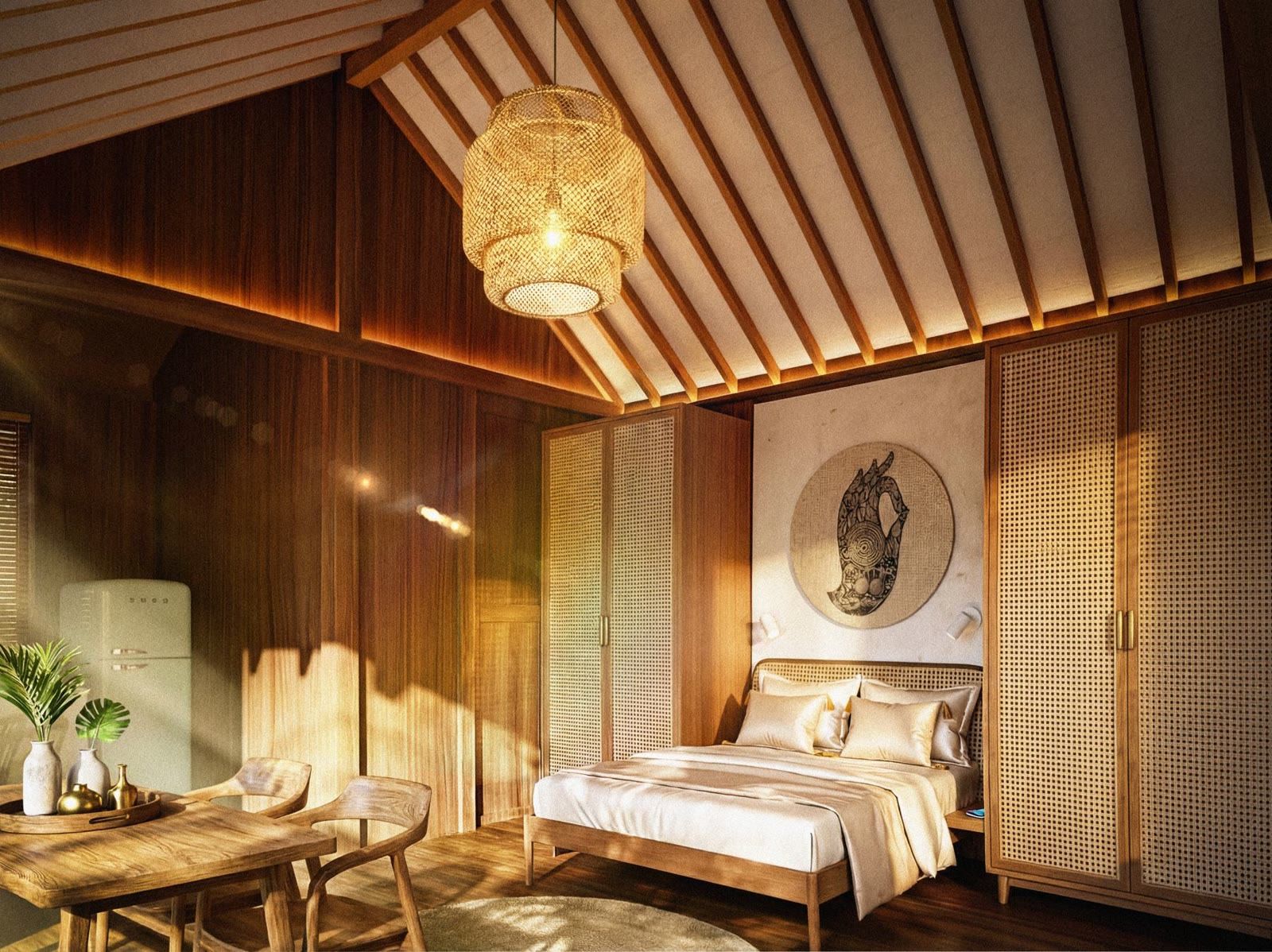
- three types of timber: teak for the load-bearing posts, mahogany for the walls, coconut palm for the interior finish;
- solid teak furniture, also made in-house.
Everything used to be done by hand; then the factory bought machinery and retrained its craftsmen. The difference between the first houses and the new ones, our partner says, is obvious to anyone who knows the trade.
Caring for a wooden house
The treatment has to be repeated:
- a teak house: at least once a year;
- a coconut-wood house: twice a year.
"It isn't expensive, but if you follow our recommendations the house will last 5–10 years longer," our partner explains.
A wooden house also copes better with earthquakes: at worst it can shift, and it is anchored in place.
Fast and quiet
The house is made in the factory and assembled on site like a kit. Production and installation take 6–7 months, unless timber drying holds things up. So there is hardly any building noise, and people already living in the finished villas are not disturbed.
Mudra's phase 1 villas are finished and rented out. Phase 2 adds five more: one two-bedroom and four one-bedroom. The foundation is designed for each plot separately: on a slope, part of a house can stand on piles up to 7 m high to catch the view.
Read next: Hidden construction defects, Wooden villas in Bali.
Key points
- Bali's humidity sooner or later brings mould to a concrete house without airflow.
- Piles, dried timber and treatment protect against damp and insects.
- Treat a wooden house once or twice a year and it will last longer.
- Mudra's wooden villas are built in 6–7 months, quietly.
FAQ
Why is there mould in Bali houses?
Because of high humidity. In concrete houses without airflow, moisture collects in the walls and under the floor.
Do wooden houses rot in Bali?
Not if the timber is properly dried, the house stands on piles with airflow, and it is treated regularly.
How often should a wooden house be treated?
Teak at least once a year, coconut wood twice a year.
How long does a wooden house take to build?
Production and installation take 6–7 months.