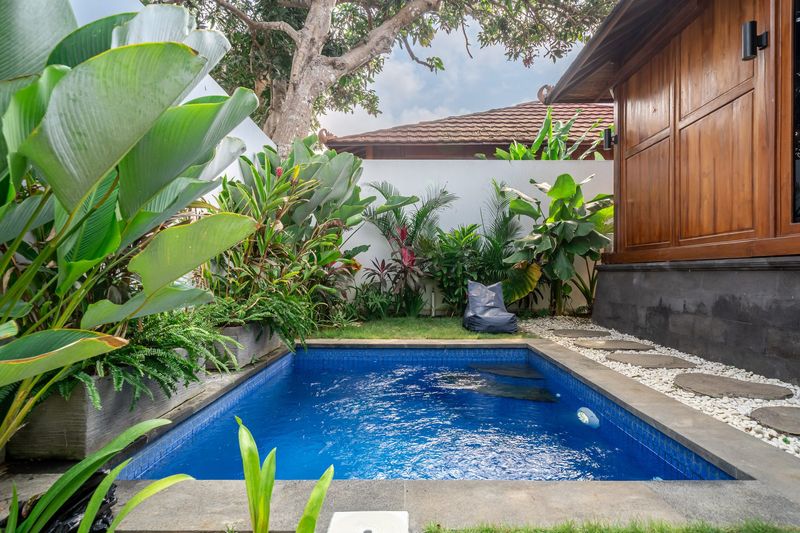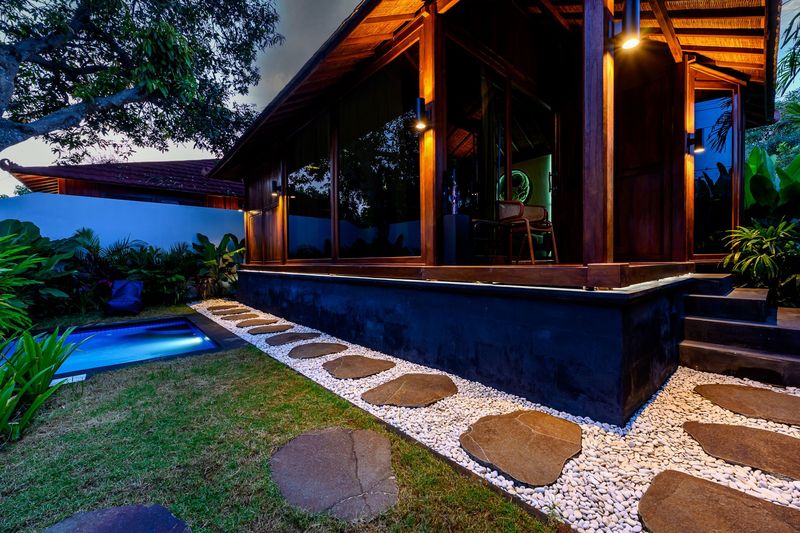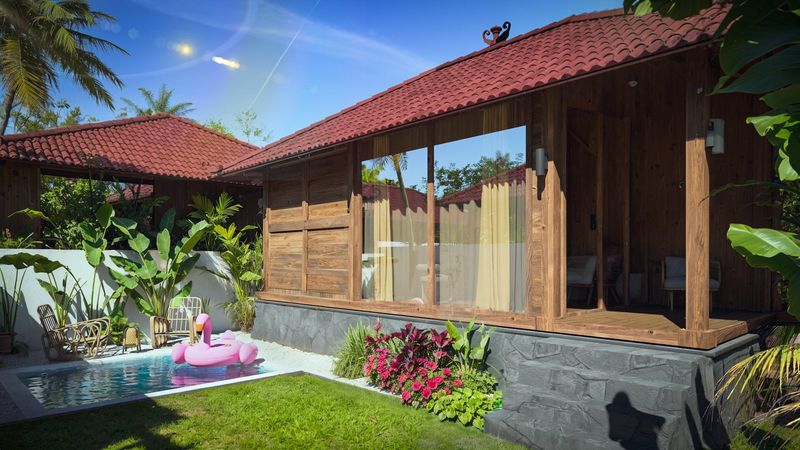
In short. A wooden villa is assembled from ready-made modules in a week to a week and a half, and it takes about six months from idea to first guests. There is no plastic in the house: only natural timber, apart from cables and pipes. The house stands on piles with air moving underneath, so it does not get damp. Treated twice a year it lasts 30+ years, and any part except the load-bearing posts can be replaced. The one downside: timber needs looking after.
We filmed this at Mudra Villas in Ungasan when the first four villas were nearly done. Guests who stay in our houses say it feels like a family cottage in the countryside, not like Bali.
What we build with
There are two options:
- teak: an oily wood that repels moisture and that pests do not eat;
- mahogany and coconut: coconut-palm posts with mahogany walls.
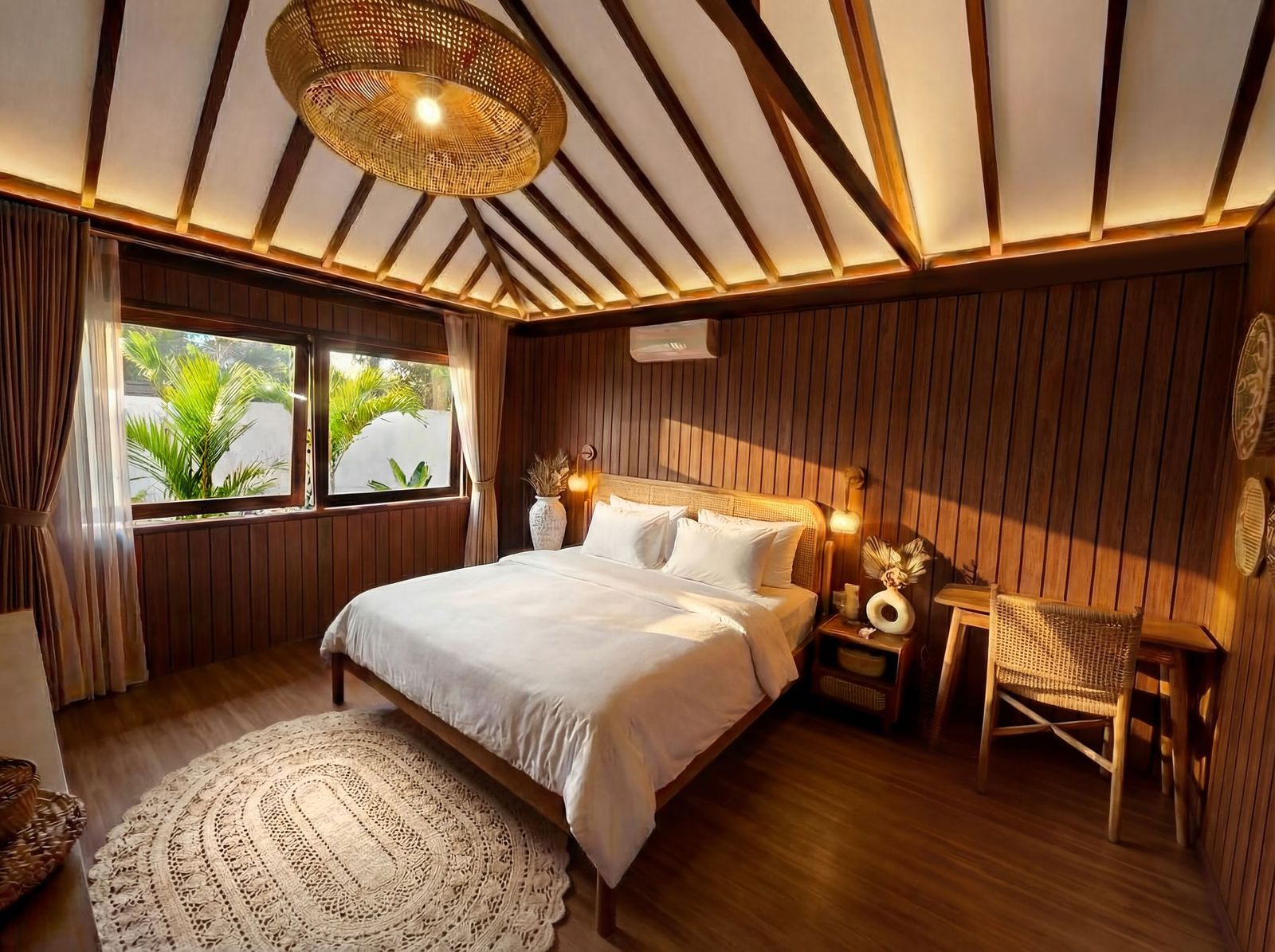
Inside: teak panelling and solid-wood furniture. Apart from cables and plumbing, there are no synthetic materials in the house. No plastic, no chemicals. The lamps are hand-woven in Java.
Why a wooden house doesn't get damp
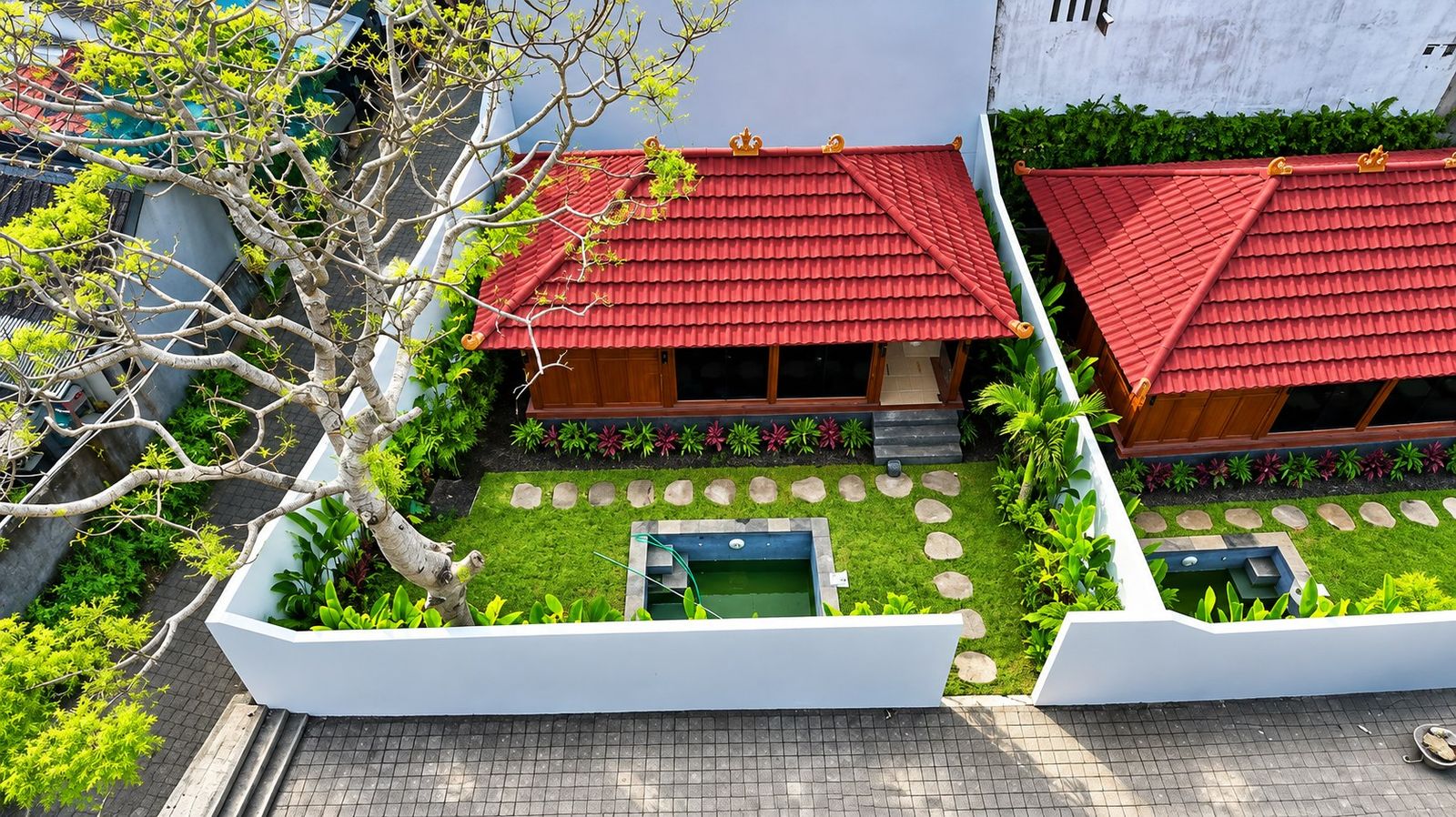
Wood breathes. However carefully you seal the micro-gaps, some remain, and that is a good thing: the house is ventilated. It stands on piles, and the foundation has deliberate openings so air always moves underneath.
More about why concrete houses in Bali suffer from mould in Why houses in Bali rot from the inside.
How long it lasts
Treated at least twice a year, the house will last 30+ years without problems. And a wooden house has an advantage a concrete one lacks: it is made of many parts. If something cracks or breaks, you take out one module and fit a new one. Only the load-bearing posts cannot be replaced.
Why it's so fast
The house arrives on site in finished sections. While they are being made, the foundation is poured, and the pool and septic tank are dug. Then the house is assembled in a week to a week and a half. From idea to first guests can take no more than six months.
The build is almost silent, too: no jackhammers in the morning. Guests at neighbouring villas are not disturbed.
What's inside
Take the studio, 8 × 4.5 m: a bed, a workspace and a large kitchen, made possible by a compact bathroom. Each house has its own small plot, a private pool and a garden with green walls.
The lighting does not dazzle whether you are standing or sitting: fixtures point up and down.
Being honest about the difficulties
In Bali it pays to check everything on site. In one of the first houses the workers could not level the curtain rails because of the opening doors, and the curtains hung unevenly. So in the next houses the curtains were hung early, checked, taken down, the work finished, and then hung again. The price of production.
What comes next
Mudra's phase 2 has five villas: one large two-bedroom and four one-bedroom studios. They will have spacious verandas for outdoor living, which guests asked for. At the entrance there will be a small reception, parking for cars and scooters, and a gated compound.
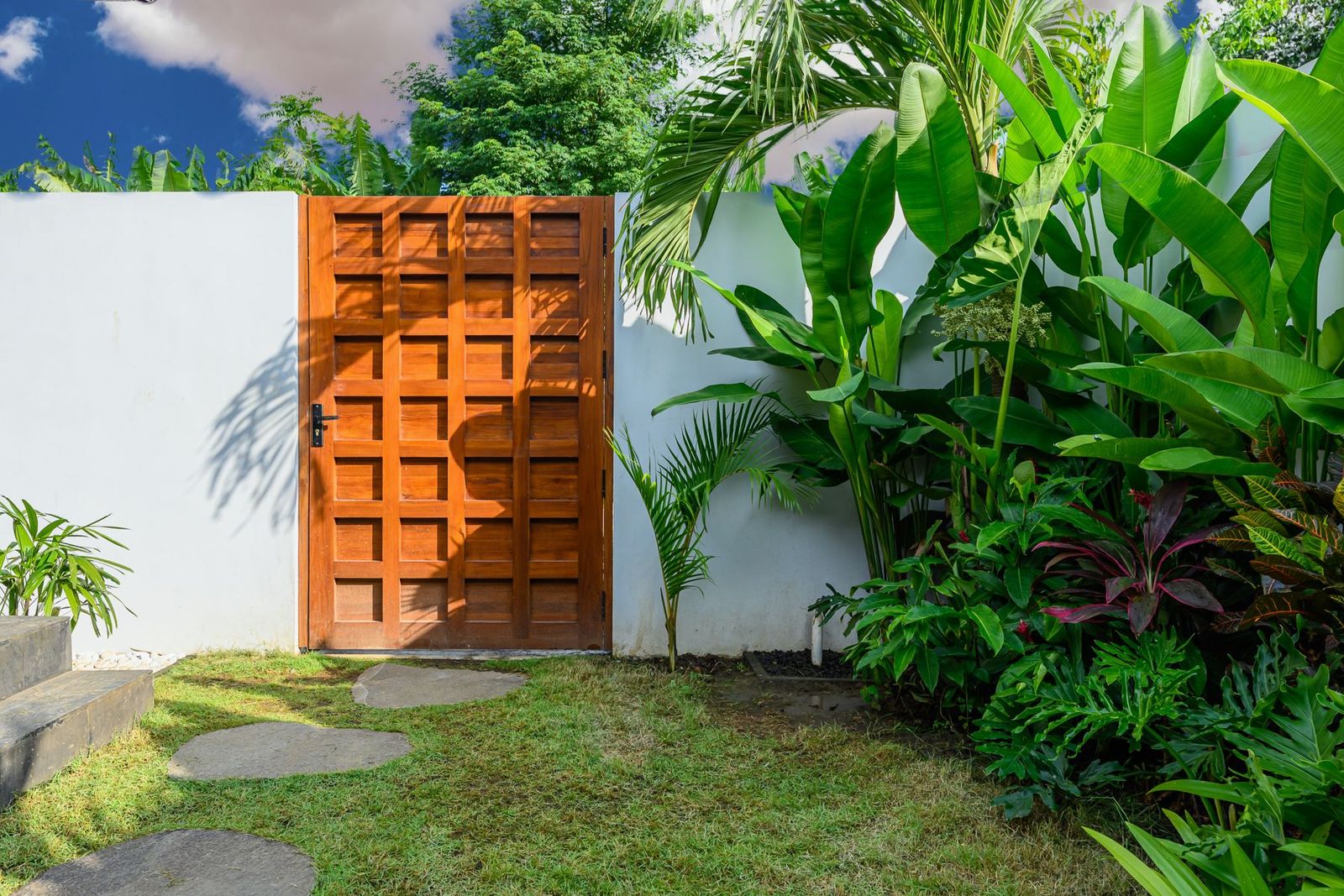
We try to keep big trees, jackfruit and banana groves. You sit on the veranda and pick a banana straight from the tree.
The four completed phase 1 houses can be bought together, for example as a surf camp.
Read next: How good wooden houses are built in Bali, Why houses in Bali rot from the inside.
Key points
- A wooden villa is assembled in about 1.5 weeks; first guests within six months.
- Natural materials and airflow under the piles prevent damp.
- With regular treatment the house lasts 30+ years; teak 40+.
- Any part can be replaced, like a construction kit.
FAQ
How much does a wooden house in Bali cost?
Our wooden houses at Mudra start at $90,000. Current prices are on the project page.
How long does a wooden villa take to build?
Assembly on site takes a week to a week and a half; from idea to first guests is about six months.
How long does a wooden house last?
Treated at least twice a year, 30+ years. Our manufacturer specifies: a teak house lasts 40+ years, mahogany and coconut 30+.
Can a wooden house be repaired?
Yes, any part except the load-bearing posts can be replaced.