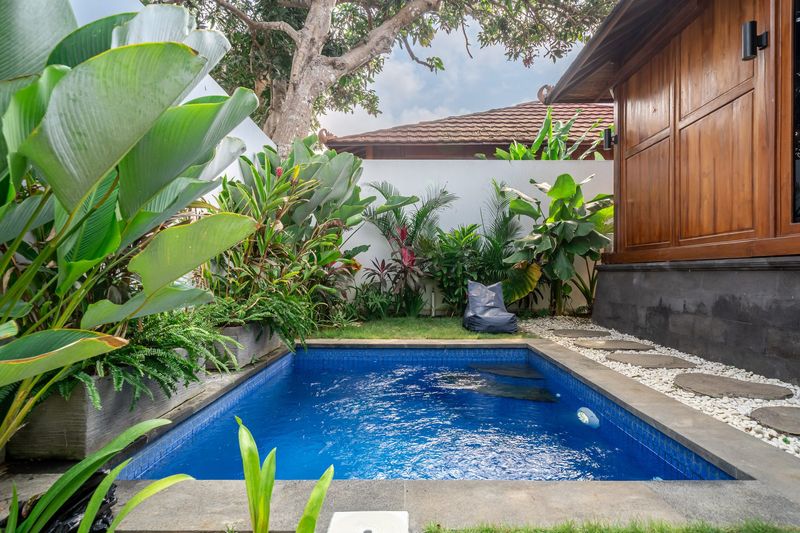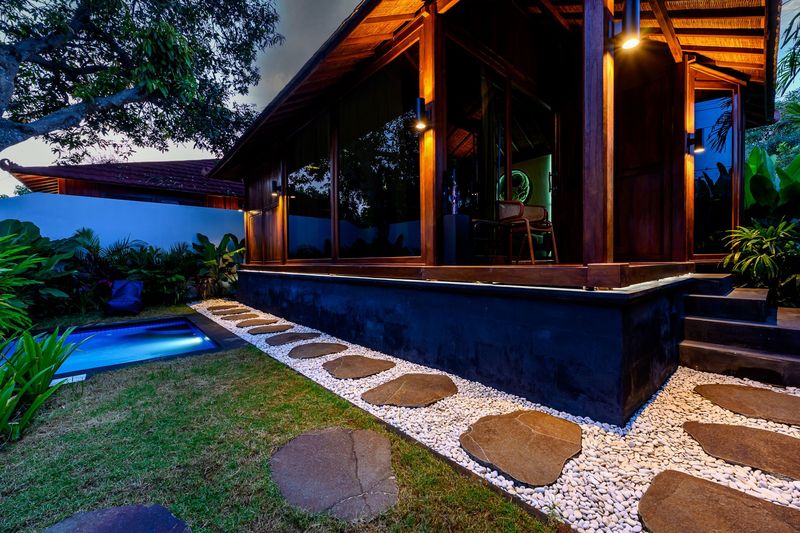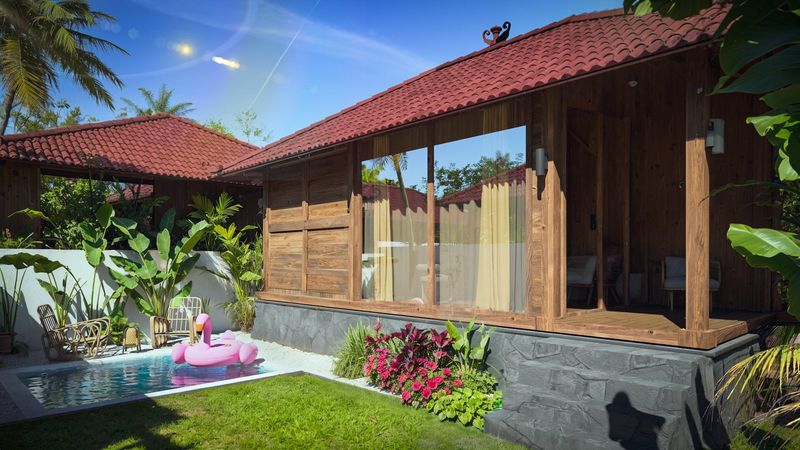
In short. The wooden houses for Mudra Villas are made by our factory together with an Indonesian partner whose family has built in timber for generations. The wood is dried in our own kilns to no more than 10% moisture and treated against mould and termites four times; each house is fully assembled at the factory, and then the same crew installs it on site. With care, a teak house lasts 40+ years and a mahogany-and-coconut one 30+. And it costs 40–70% less than a concrete house.
We talked with Alexander, our partner in wooden-house production. He came to Bali at the invitation of friends, after a whole career in sales.
Why timber, not concrete
"Concrete doesn't work very well here, with the humidity and the weather: it's very hard to get away from damp and mould," Alexander explains. That led to the idea of building wooden houses in the Balinese style, but to European standards.
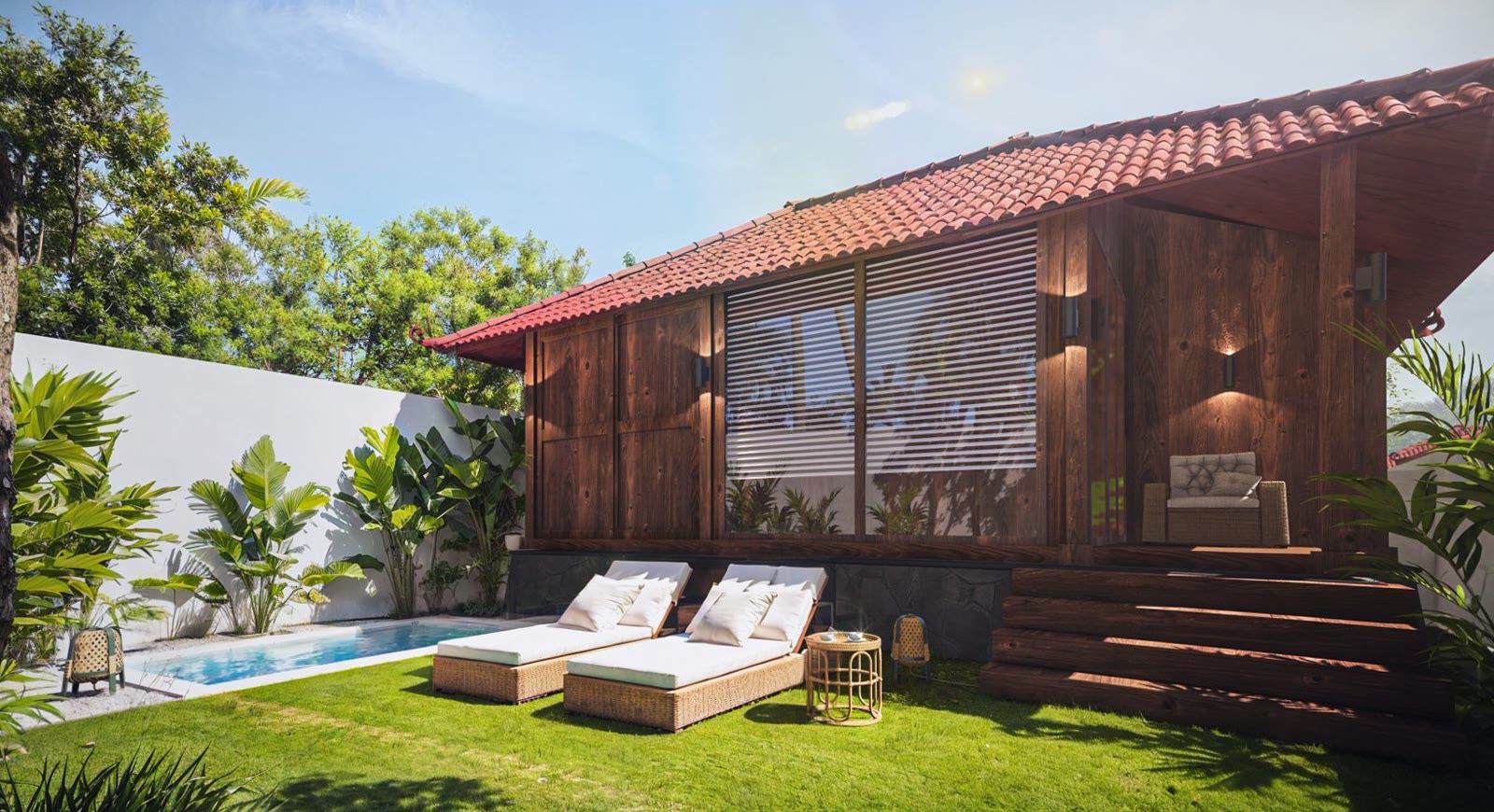
How they differ from a traditional joglo:
- the house is fully closed, without gaps for small animals to get in;
- the walls are multi-layered, with sound and heat insulation inside;
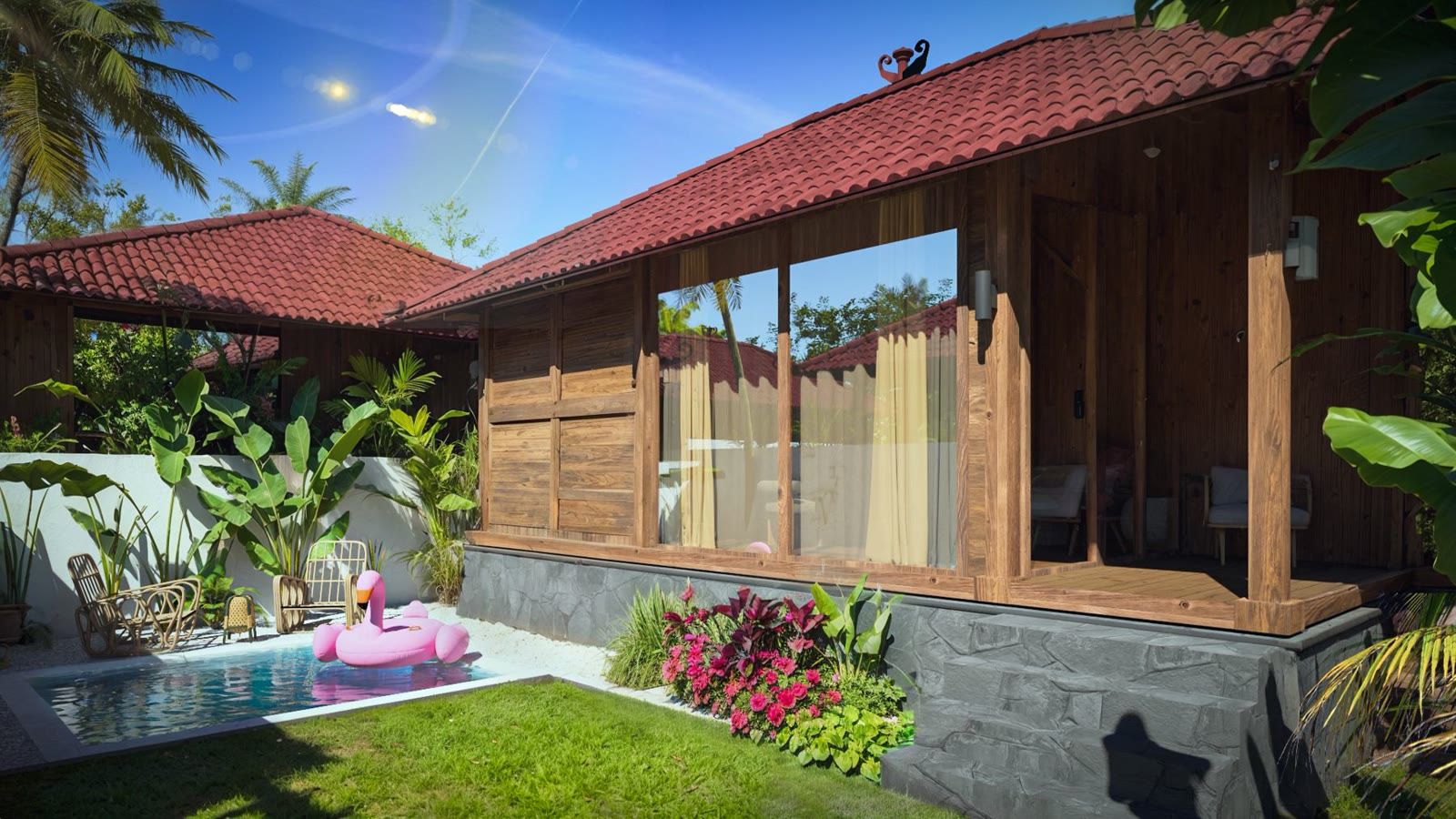
- big panoramic windows, so you wake up to a view of nature.
Who builds the houses
The key person is our Indonesian partner, whose grandfather and great-grandfather also built in timber. He buys the wood, hires the people and watches the quality. "Even with all our knowledge and ChatGPT, we can't do what someone with woodwork in their blood can," says Alexander.
Production is tied to the Jepara region of Java, where, according to Alexander, around 80% of households work with wood.
Drying: where others cut corners
Timber needs up to three weeks in the kiln to get its moisture down to 10% or less. Shared kilns in Bali have long queues, and they dry wood less and unevenly: one board comes out at 8% moisture, another at 24%. Wood like that later "dances". So we built our own kiln.
Four rounds of treatment
- Every part is treated against mould and termites as it is made.
- After the first assembly at the factory, again, before painting.
- Before installation, the plot itself is treated to clear insects and larvae from the soil.
- After assembly on the client's plot, a final treatment.
The owner then gets instructions. Outside and under the house: spraying. Inside: a "dry fog" pumped through the sockets straight into the gap between the panels of the double wall. Coconut panelling gets extra anti-fungal treatment. Mahogany and coconut should be treated at least twice a year. Plenty of companies on the island do this cheaply.
With that care, Alexander says, a teak house lasts 40+ years and a mahogany-and-coconut one 30+.
Assembled twice
The house is first fully assembled at the factory: panels, posts and floors, with every part fitted. Then it is taken apart, treated again, painted and taken to the plot. The same crew that built it at the factory installs it on site; they know exactly what to tighten and sand. The factory can now make and assemble five houses at once.
Everything in-house
When teak parquet was needed, our Indonesian partner said: we need two machines. They were bought, and now the parquet is made in-house. The same goes for furniture. The electrics had to be reinvented: there were no sockets or switches for surface wiring in Bali, so a way was developed to hide the wiring inside the walls.
The hardest part: teaching quality
"Make it as if it were for yourself," the craftsmen used to be told. "And for themselves they make things in a way we wouldn't make for our enemies," Alexander laughs. He spent the first six weeks at the factory. The craftsmen were used to working by hand, and getting them used to the machines took six to eight weeks. Now the difference between the first hand-made houses and the new ones is obvious.
Cheaper than concrete
According to Alexander, a teak house costs 40–50% less than a concrete one, and a mahogany-and-coconut house 60–70% less. That is why the wooden houses at Mudra start at $90,000.
Guests feel it. Some say the smell of timber reminds them of a grandparent's house in the countryside. Recently a couple from Serbia and Italy checked out, and the Italian guest described "with Italian expressions and gestures" how good her stay had been.
Read next: Wooden villas in Bali, Balinese villas cost less than you think.
Key points
- Good timber is dried to 10% moisture, or it "dances".
- Four treatments and regular care, and the house lasts 30–40 years.
- The house is assembled twice, at the factory and on site, by one crew.
- A wooden house costs 40–70% less than a concrete one.
FAQ
How long does a wooden house last in Bali?
According to the manufacturer, teak 40+ years and mahogany-and-coconut 30+, with regular treatment.
How is a wooden house better than a joglo?
It is fully closed, with sound and heat insulation and big windows. A joglo has large gaps and no insulation.
Is a wooden house cheaper than a concrete one?
According to Alexander, teak by 40–50%, mahogany and coconut by 60–70%.
How is a wooden house protected from termites?
Four treatments during production and installation, then regular care: spraying outside and a "dry fog" inside the walls.