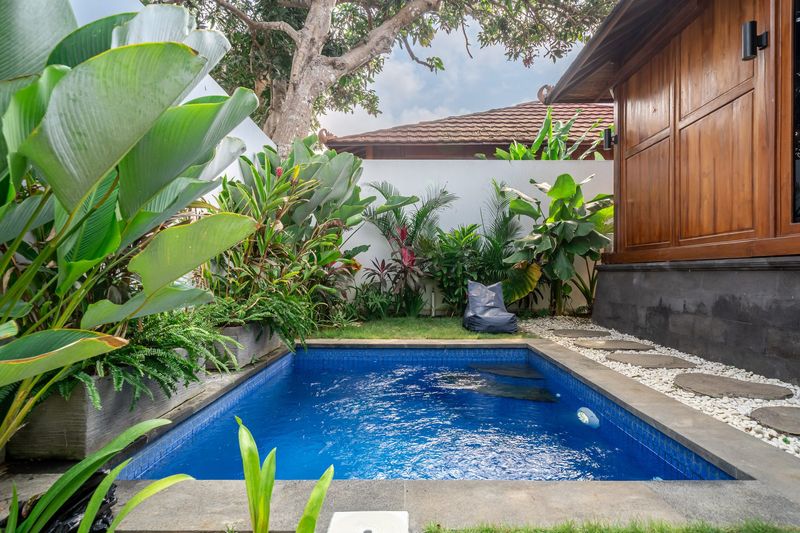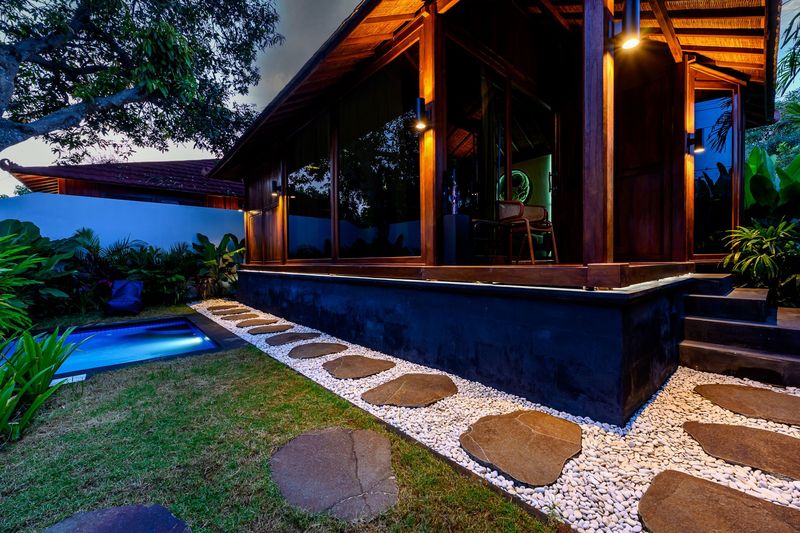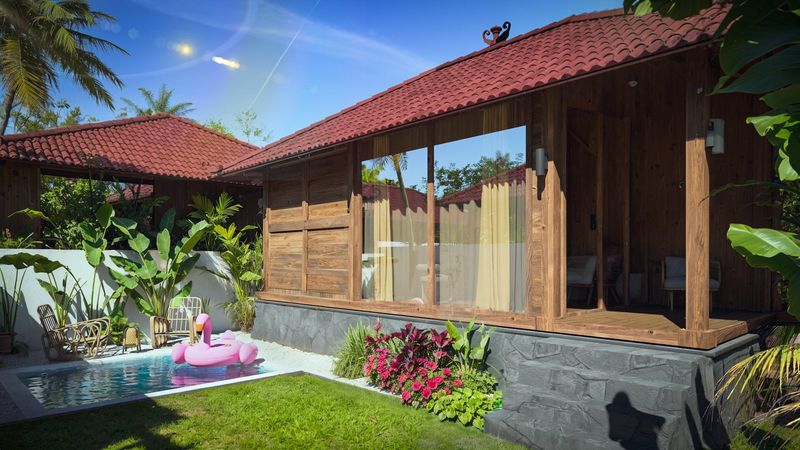
In short. At Mudra Villas in Ungasan there are four finished one- and two-bedroom wooden houses, each with its own pool, plus free land and a reception next to them. The surf spots are 10–15 minutes away. All of it is for sale together for $650,000, as the base for a surf camp run by the buyer. The houses are already rented out by the night and by the month. An extra timber building on the free land can be built in 6–7 months; a two-storey 120 m² teak house costs from about $40,000.
To be honest, we are not surfers, and surf infrastructure is better built by someone who lives it. The idea is simple: you buy the finished houses and the land, turn them into your own surf camp and earn from it.
What is for sale
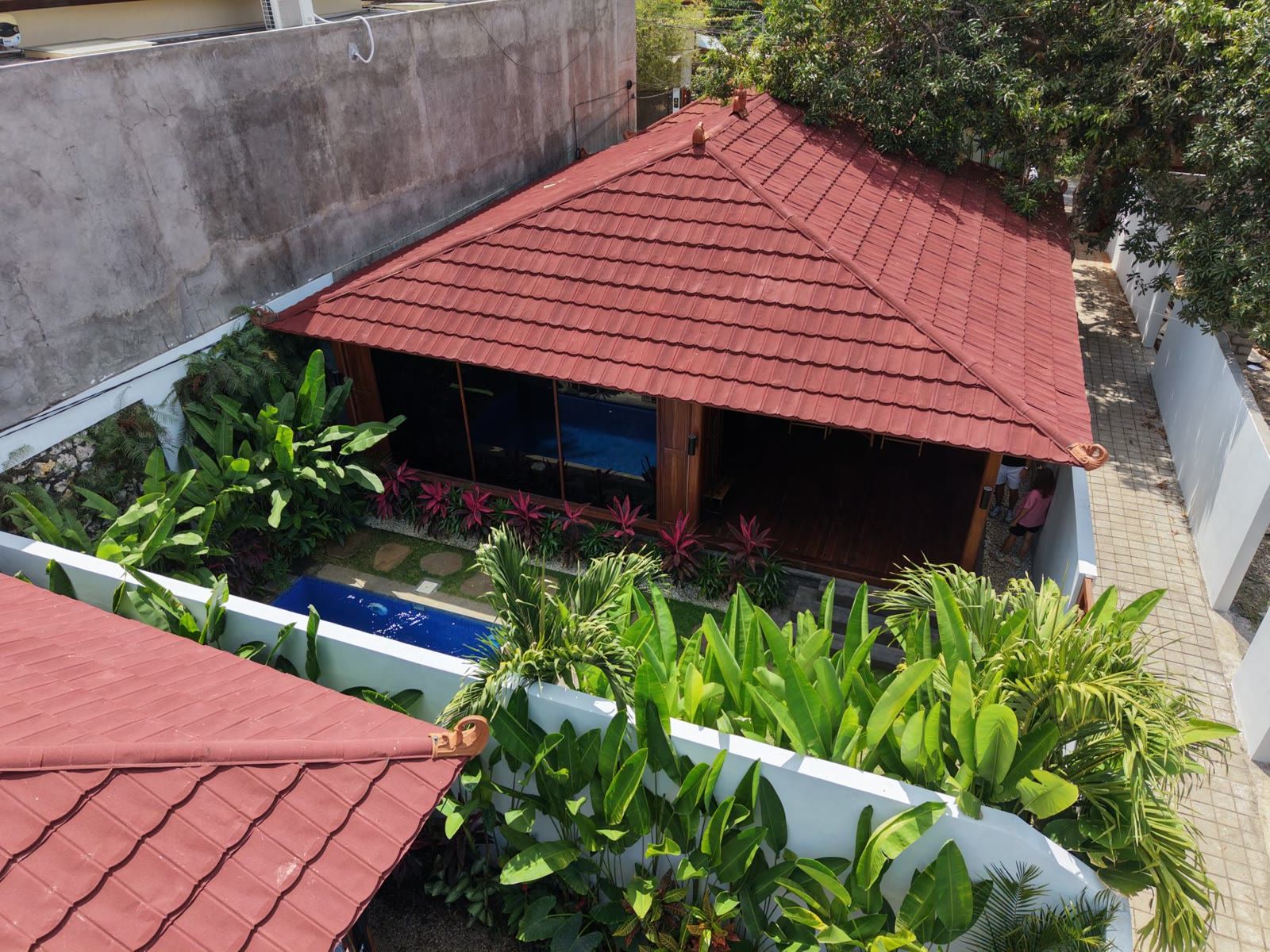
- Four finished teak houses with one and two bedrooms, each with its own plot, pool and terrace.
- Inside: a fully equipped kitchen, natural stone bathrooms and a small study.
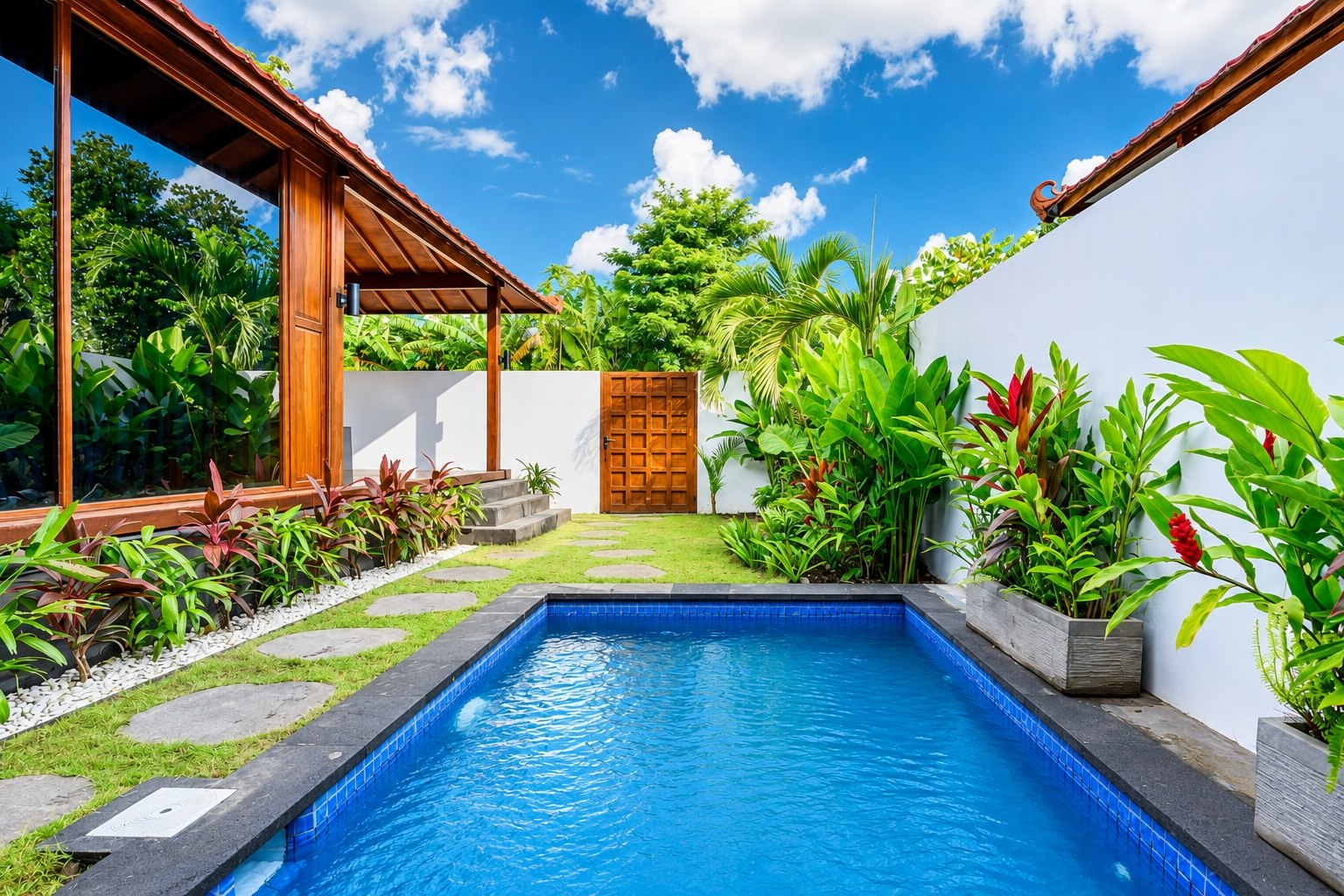
- Free land next to them for a shared building.
- A reception.
- Price for everything: $650,000.
The houses are already working: they are rented by the night and by the month, and if a house is free it can be rented for a year. Towels, tableware and a management company that does the cleaning are included.
Why it works for surfers
The surf spots are 10–15 minutes away, depending on how you drive. After a session you come back to a house where "everything breathes", cook in your own kitchen and spend the evening on the terrace with a guitar. The shared area is crying out for a fire pit.
The idea came from our own experience. On our first trip to Bali we went to a surf camp in Kuta. Accommodation was not included, the group had booked out one hotel in advance, and there were no rooms left. That is when the thought came: it would be great to arrive at a turnkey surf camp with not just lessons but a community and a place to stay near the spot.
There is a catch: the area around Mudra is still fairly empty. But if you create a well-thought-out, useful space here, the pluses will outweigh it.
What can be added
The free land can take a shared building: a café, a gym, a meeting room, a room for reviewing surf footage. Our production partner says that in timber this will be "much faster than in concrete and stone": turnkey in 6–7 months.
The price depends on the design: first it is drawn, then costed. As a guide, a two-storey 120 m² teak house, according to our partner, comes to about 700–750 million rupiah, around $40,000. You can choose teak, mahogany, coconut wood or the hardest timbers, ulin and bangkirai.
The design takes earthquakes into account: the Bukit, where Mudra stands, is considered safer than the areas near the volcanoes.
How long the houses last
Termite treatment is done twice a year, every six months. According to our partner, this extends the house's life by 20–25%. A properly treated teak house lasts 40–50 years, and ulin and bangkirai houses practically indefinitely. If a part gets damaged, it is replaced within a week.
More in Wooden villas in Bali: how they are built and whether to buy one.
Who runs it
The surf camp is the buyer's business. We sell the houses and the land and can build extra buildings. You choose the coaches, the programme and the format of the camp.
Read next: Balinese villas cost less than you think, Sidewalk Jimbaran.
Key points
- Four finished houses, land and a reception: the base for a surf camp for $650,000.
- Surf spots 10–15 minutes away.
- A shared timber building can be built in 6–7 months.
- The buyer runs the camp; we provide the houses and the construction.
FAQ
How much does the Mudra surf camp cost?
Four finished houses, the free land and the reception: $650,000.
How far is it to the surf spots?
10–15 minutes.
Can a shared building be added?
Yes. A turnkey timber building takes 6–7 months; a two-storey 120 m² teak house costs from about $40,000.
Do the houses earn money now?
The houses are already rented by the night and by the month through a management company.