In short. Jalan Bumi Ayu in Sanur sits in a dip, and for years water collected there in the rainy season. In 2026 the city laid a drainage channel about 1 km long along the street and installed a pump. After a recent downpour, the city's public works office says the road stayed dry. Another pump is due before the end of the year, and a larger system will be built in 2027. The work is still in progress, so the real test is the next rainy season.
We are building Villa Garis on this street, so we follow the news about it closely. Below is everything local media have reported about Bumi Ayu, with dates and links. No spin.
Why Bumi Ayu floods
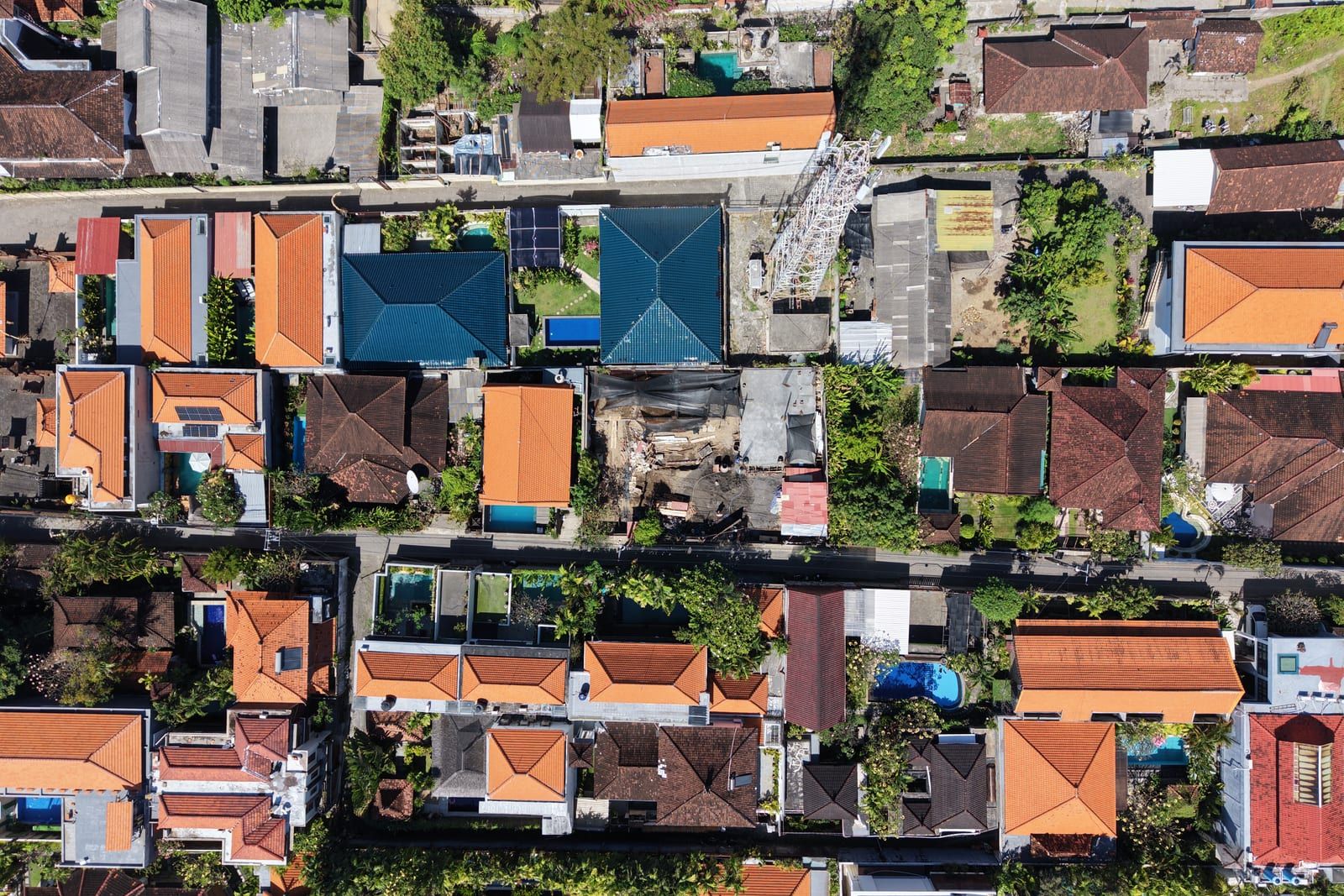
The street is in a low-lying area. Local media describe the neighbourhood as sitting "in a bowl" with nowhere for the water to go. This used to be rice fields, which soaked up the rain. They were built over, and there is no natural run-off nearby.
It was most visible earlier this year. Jakarta Globe reported on 25 February 2026 that after the storm of 24 February, residents and tourists on Bumi Ayu were taken out in inflatable boats, and nine fire engines pumped out the water. That is something you want to know before you buy, not after.
What the city has already done
The work is led by the Denpasar public works office (Dinas PUPR). According to Bali Post on 5 October 2026:
- a precast concrete U-ditch about 1 km long has been laid along the street;
- a 20 litres per second pump has been installed to clear water faster during heavy rain;
- the water is directed towards Jalan Danau Tamblingan and into the roadside channels;
- across the city, riverbeds are being cleared at 40 points, including the Tukad Loloan river in Sanur.
A month later, Bali Post reported on 3 November 2026 that the head of the office, I Gede Cipta Sudewa Atmaja, said there was no standing water on the road after the latest rain. In his words, the channel is working well.
What is planned next
From the same Bali Post report of 3 November:
- Before the end of 2026, a second 20 litres per second pump will be installed on Bumi Ayu.
- In 2027, the city will build a larger system on Jalan Kanda: a box culvert and two high-capacity pumps of 500 litres per second each. The water will go towards the Ngurah Rai Bypass and into the Tukad Loloan river. The budget is about IDR 15 billion.
So the first stage is already working, and the main part comes next year.
What we don't know yet
There is not much data yet, and here is exactly where the gaps are:
- "Dry after the rain" refers to a single downpour early in the season. There are no measurements for a full season yet.
- Bali's heaviest rain falls from December to March. That is the real test for the new drainage.
- The larger Jalan Kanda system is only planned for 2027. Public works schedules in Bali sometimes slip.
So we are not going to promise that this street will never flood again. On the facts, the picture is this: the problem has been acknowledged, the first stage is done and has already worked, and the next one is planned.
How Villa Garis is built for this
On a low-lying street, a lot depends on the house itself. What we did at Villa Garis:
- deep foundations: they go 1.5 m into the ground, with a stone base, fully reinforced;
- a three-layer roof: bitumen roofing with a membrane and an underlay, so the roof holds up in the rainy season;
- termite protection: the plot was treated before the slab was poured.
For the full build process, see How to build a villa in Bali from scratch.
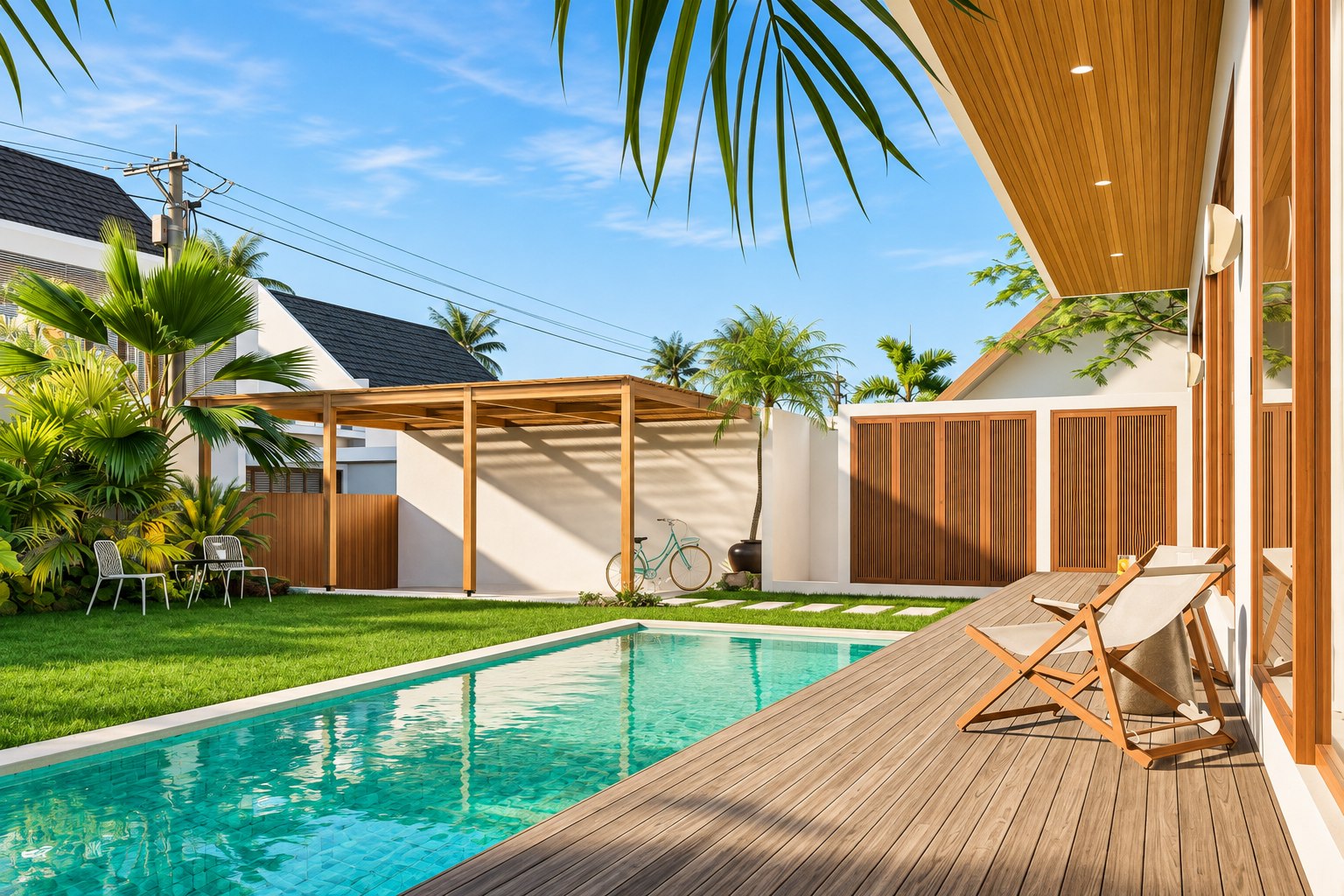
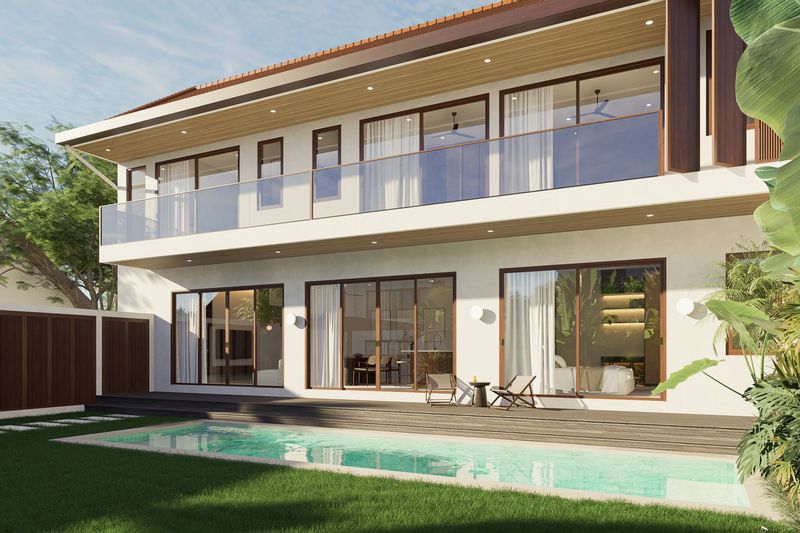
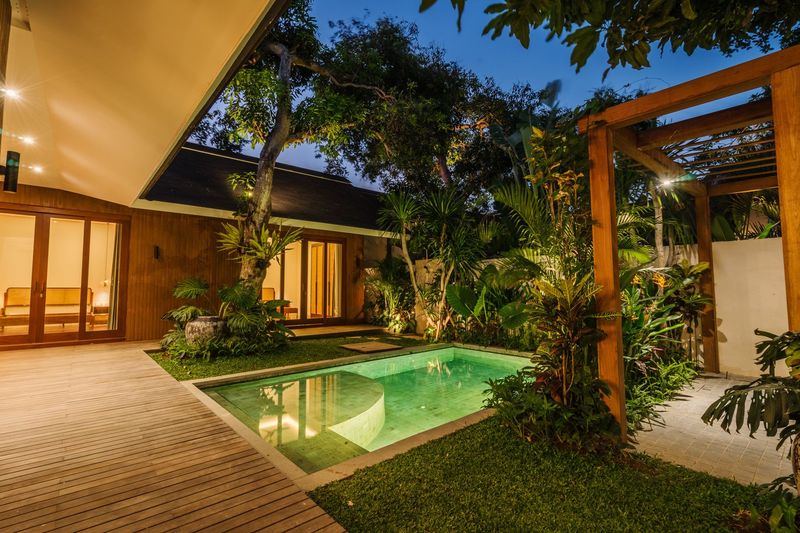
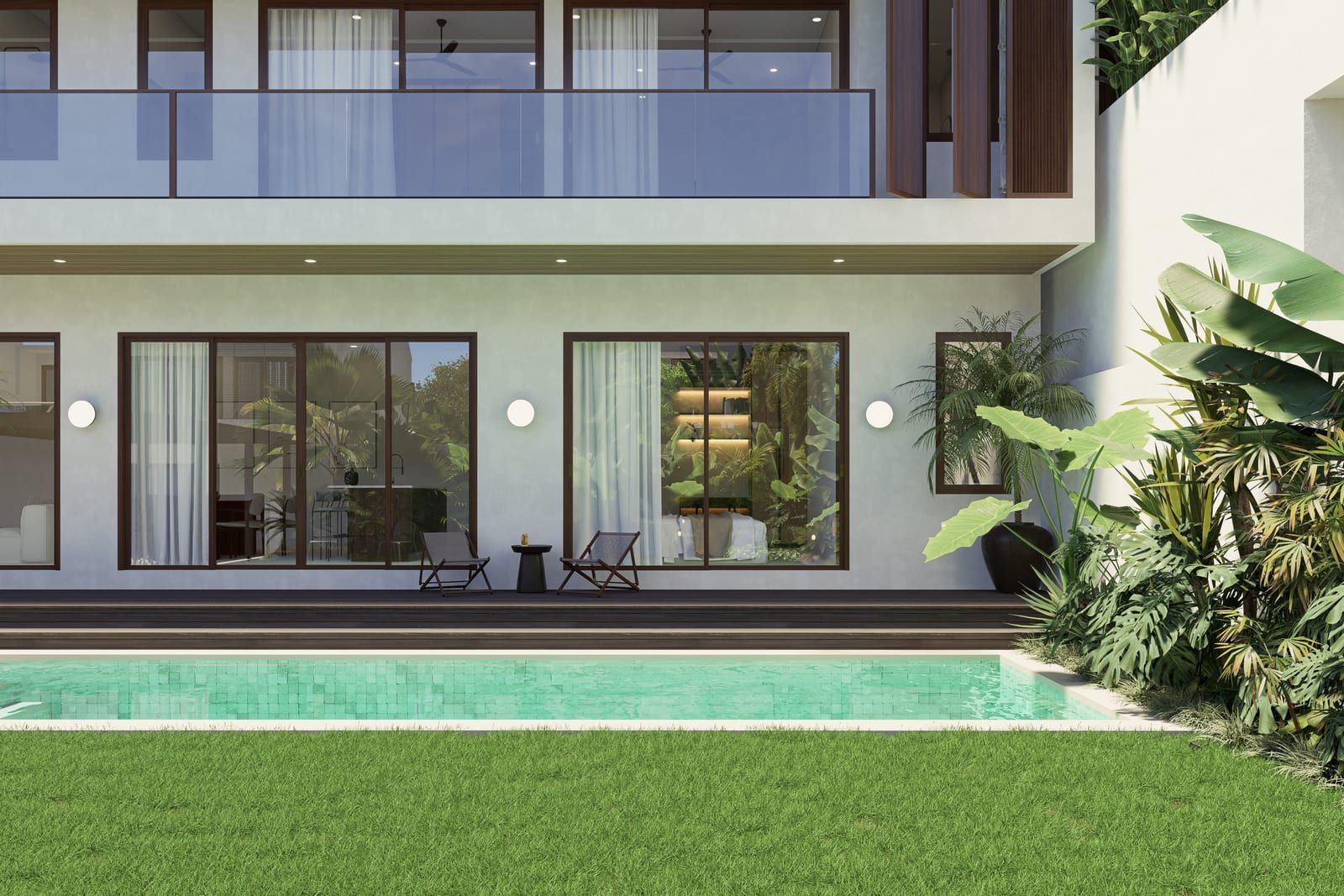
The villa itself: a 164 m² house on a 300 m² plot, three bedrooms, a private pool and a garden behind high walls. Karang beach and Icon Bali mall are about a 10-minute walk away. Completion is planned for March 2027 and the price is $487,000. While it is under construction you can pay in instalments: 50% up front and the rest over up to 12 months, interest-free. More about the villa: Sanur is almost fully built up: why we are building Villa Garis.
What to check if you are looking at a house on this street
This applies to any house on Bumi Ayu, not only ours:
- Ask how high the ground floor is above the road.
- Find out where water drains from the plot and whether there is a pump or drainage of its own.
- See the street in heavy rain, or ask for a video after a big storm.
- Ask the neighbours how the last rainy season went.
The numbers
What | Value | Source |
|---|---|---|
Drainage channel on Bumi Ayu | about 1 km | Bali Post, 5 October 2026 |
Pump already installed | 20 l/s | Bali Post, 5 October 2026 |
Second pump by the end of 2026 | 20 l/s | Bali Post, 3 November 2026 |
Pumps on Jalan Kanda in 2027 | 2 × 500 l/s | Bali Post, 3 November 2026 |
Budget for the 2027 system | about IDR 15 billion | Bali Post, 3 November 2026 |
Key points
- Bumi Ayu is low-lying and water used to collect there in the rainy season. We say so plainly.
- In 2026 the city laid a 1 km channel and installed a pump; after a recent downpour the road was dry.
- Another pump is due before the end of the year, and a larger system on Jalan Kanda in 2027.
- When choosing a house on a street like this, look at the foundations, the floor height and how water drains from the plot.
FAQ
Does Jalan Bumi Ayu in Sanur flood?
It has: the street is low-lying, and in February 2026 people were evacuated from it. In 2026 the city laid 1 km of drainage and installed a pump. After a recent downpour the road was dry, according to Bali Post on 3 November 2026.
When will the work be finished?
The second pump is promised before the end of 2026. The larger Jalan Kanda system with two 500 litres per second pumps is planned for 2027.
Can we say the problem is solved?
Not yet. The first stage has worked, but it can only be judged over a full rainy season, from December to March.
Where exactly is Villa Garis?
On Jalan Bumi Ayu in central Sanur. See it on Google Maps.